

Have you had doctor visits or tests this year? Then this is worth a few minutes. You may have already paid your insurance deductible. If so, you may pay less for a sleep test now than after your deductible starts over.
Here's how it works and how to see your cost before you commit.
What Is a Deductible?
Your deductible is the amount you pay for your care each year before your insurance starts paying its share[1].
After you've paid it, you usually pay less. Most often that's a set fee (a copay) or a small percentage of the bill (coinsurance)[1].
Why Can a Sleep Test Cost Less Before the Reset?
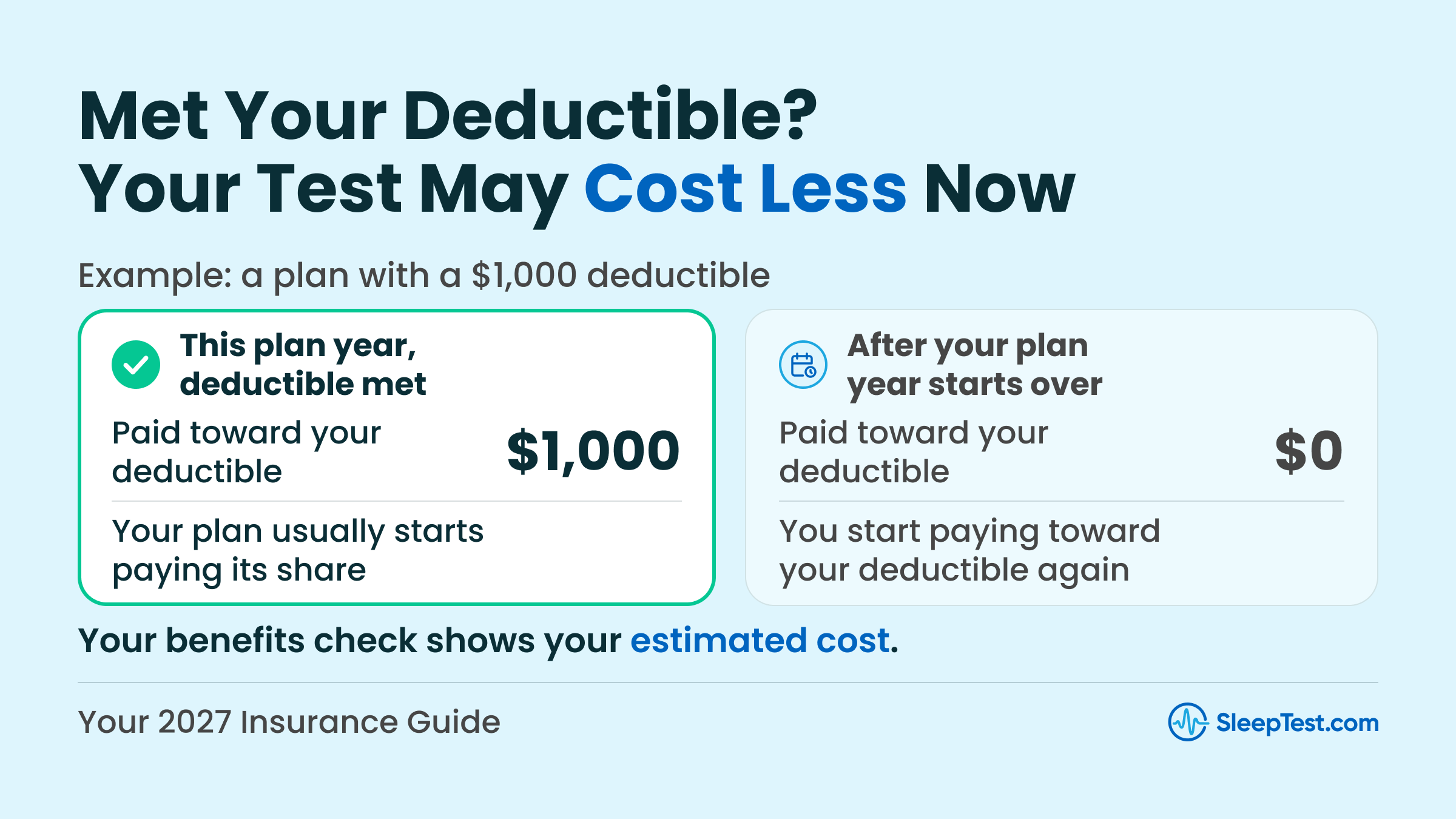
Because your deductible goes back to zero when your plan year starts over. Then you start paying toward it again from the beginning.
Here's a simple example. The numbers are made up to show how it works.
Your deductible is $1,000
Before the reset
- What you've paid toward it
- $1,000 (all of it)
- Who pays
- Your plan starts to share the cost
After the reset
- What you've paid toward it
- $0 (starting over)
- Who pays
- You pay until you reach $1,000 again
If you've already met your deductible, your plan may share the cost of a test now. After the reset, you start paying again from zero. If you've paid little this year, the timing may not change much. Either way, check before you decide.
When does your plan year reset? If your plan runs January to December, your deductible starts over on January 1. Some work plans use a different month. The member services number on your card can tell you.
How Do You Check Your Deductible?
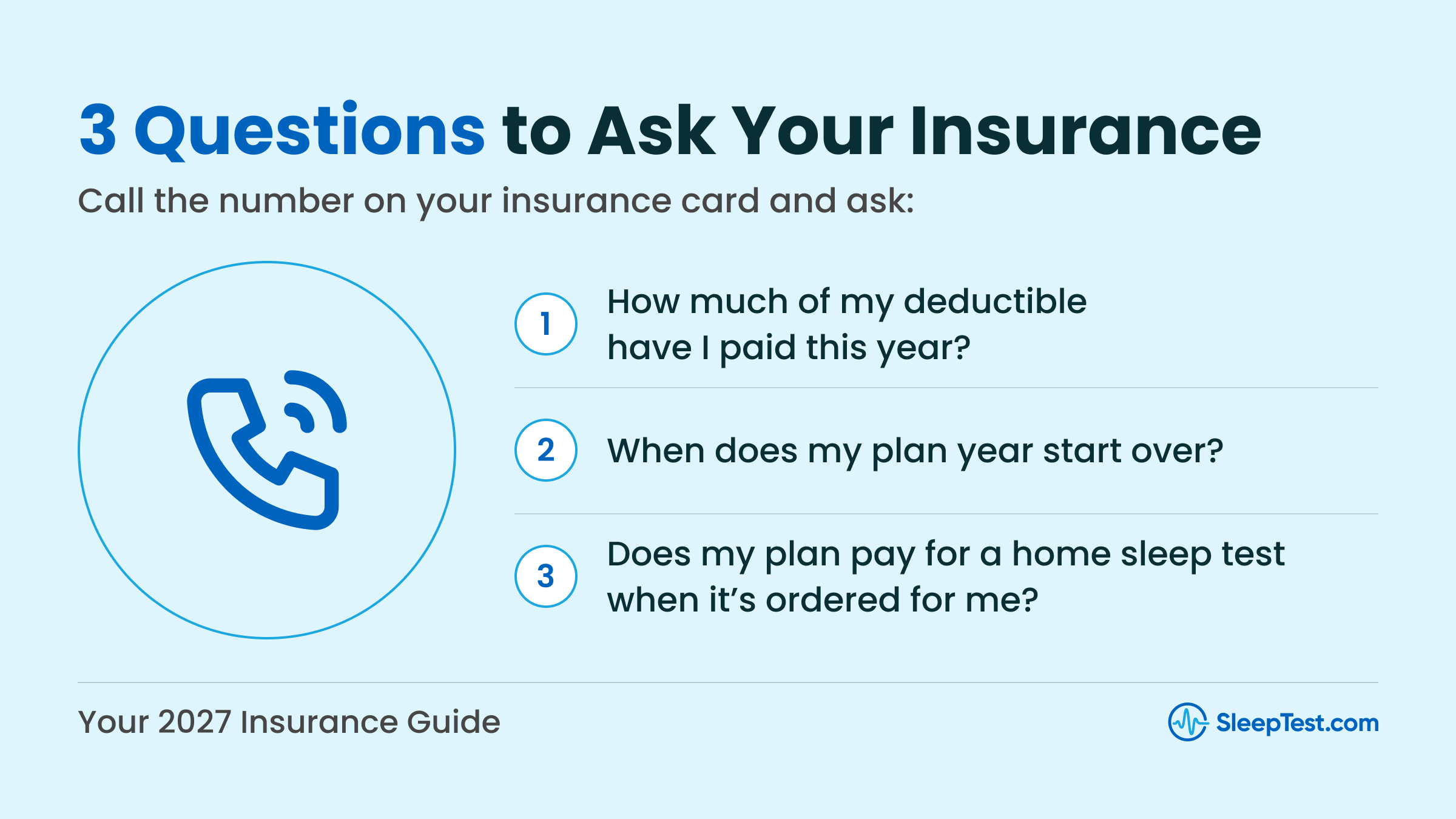
It takes one phone call. Call the member services number on the back of your insurance card. If your insurance company has a website or app, you may find it there too.
Ask three things:
- How much of my deductible have I paid this year?
- When does my plan year start over?
- Does my plan pay for a home sleep test when it's ordered for me?
Write down the date, who you talked to and the reference number. Keep in mind that a cost you hear on the phone is an estimate, not a promise. The final amount comes from the bill your plan gets (the claim).
Not sure a sleep test is right for you? Take the 1-minute quiz.
What Do the Other Insurance Words Mean?
You may hear these on the call[1]:
- Copay: a set fee for a visit or test, for example $20.
- Coinsurance: a share of the bill, for example 20%.
- Prior authorization: your plan wants to approve the test first. Ask your provider's office if they send it in. Even an approval isn't a promise your plan will pay[1].
- Billing code: a short number your insurance uses for each service. You don't need to know it. If they ask, your provider's office can give it to you.
What Changes for Medicare in 2027?
Medicare Part B is the part of Medicare that pays for doctor visits and tests. It pays for sleep tests when you have signs of sleep apnea and a doctor or other provider orders the test[2].
The Part B deductible goes up in 2027[3]:
After you've paid the deductible, you usually pay 20% of the price Medicare sets for the test[2]. Is your card from a private insurance company? Then you may have a Medicare Advantage plan. It sets its own costs, so call the number on your card.
How Does SleepTest.com Show Your Cost First?
We do the insurance homework with you. SleepTest.com is a Joint Commission-accredited IDTF (Independent Diagnostic Testing Facility). That means an outside group checks our testing. We test for sleep apnea. We don't treat it.
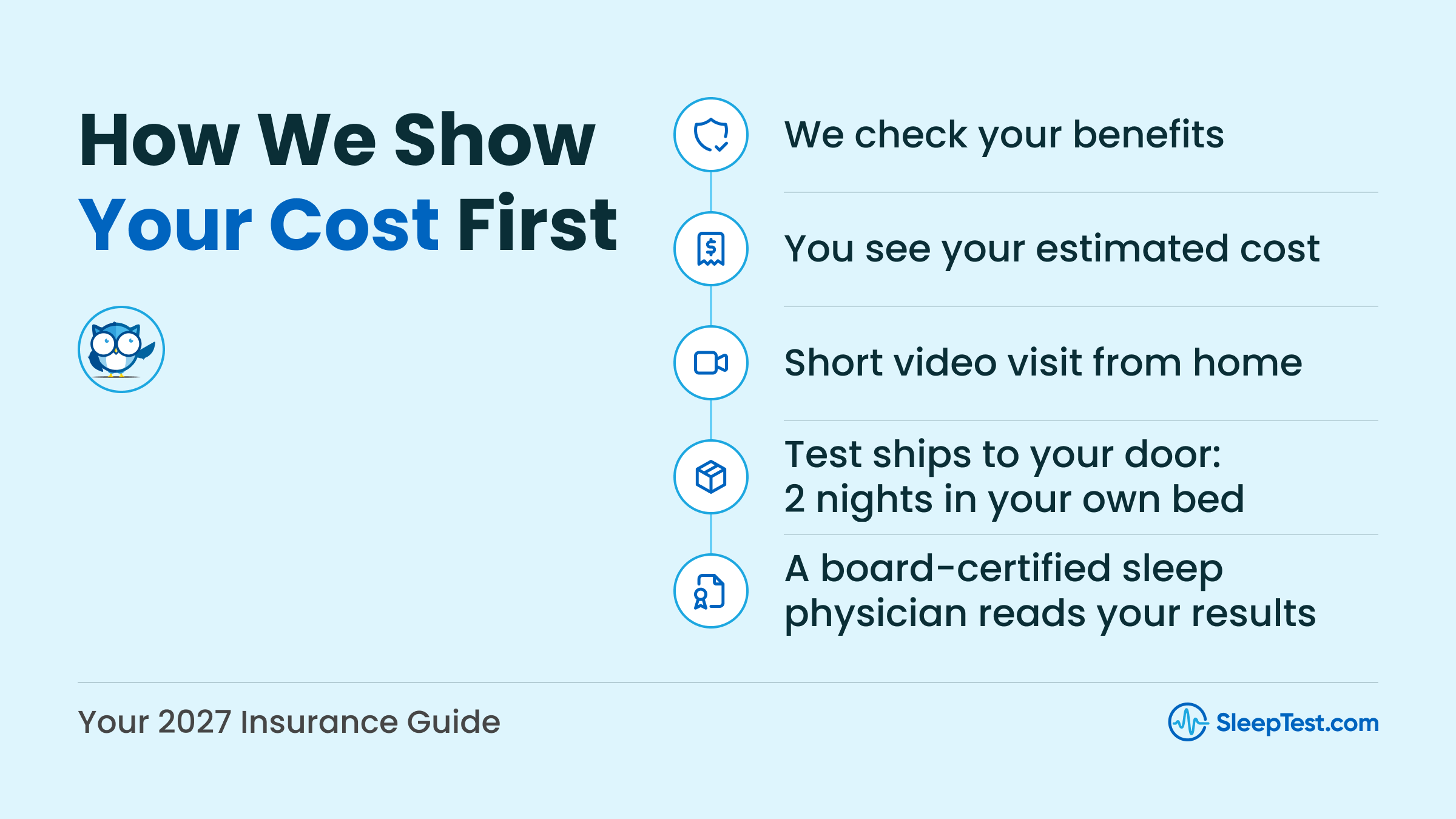
If you use insurance, here's how it goes:
- We check your benefits. There's no obligation.
- You see your estimated cost. It shows in your online patient portal before you commit.
- You have a short video visit from home. It's required when you use insurance.
- The test ships to your door. You wear it for 2 nights in your own bed.
- A board-certified sleep physician reads your results. They come back in days, with the paperwork your own provider needs.
Your cost depends on your plan. Your benefits check gives you an estimate of what you'll pay. It isn't a promise of what your plan will pay. Patients often pay less than $150 for everything.
Don't want to use insurance? Choose Skip-2-Ship, our option to pay without insurance. It skips the benefits check and the video visit and goes right to shipping.
If you've met your deductible this year, don't wait for the reset. Each step takes a little time, so starting soon gives you the best chance to finish before your plan year ends.
Your next step: call the number on your insurance card and ask how much of your deductible you've paid. Then order your test, and we'll show your estimated cost before you commit.

Frequently Asked Questions
Will my insurance pay for a sleep test?
It depends on your plan. A benefits check shows your estimated cost before you commit.
Should I test before my deductible resets?
If you've paid all or most of your deductible this year, you may pay less by testing before the reset. If you've paid little, the timing may not matter. Call the number on your card to check.
What is the Medicare Part B deductible in 2027?
$292, up from $283 in 2026[3].
How do I know if I need a sleep test?
Snoring with choking or gasping, or pauses in breathing that a bed partner notices, are warning signs of sleep apnea[4]. Only a test and a doctor can tell you for sure.
This article is for general education. It isn't insurance or medical advice. Coverage and costs vary by plan, so check with your insurance company and your healthcare provider.
Sources
- HealthCare.gov glossary: deductible, copayment, coinsurance, prior authorization, preauthorization and plan year. healthcare.gov/glossary
- Medicare.gov, Sleep studies and Medicare costs
- CMS, 2027 Medicare Parts A & B Premiums and Deductibles (fact sheet, Nov 17, 2026)
- American Academy of Sleep Medicine, "Is it more than a snore? Recognizing sleep apnea warning signs" (news release, June 8, 2021). aasm.org


Waking up exhausted, snoring loudly, or fighting brain fog all day? Sleep apnea treatment has never had more options, from CPAP and custom oral appliances to weight-loss medication and Inspire nerve stimulation. But every one of them starts with the same step: an official diagnosis from a sleep test, which you can now take at home in your own bed.

