

Ask most people to picture sleep apnea and you'll get the same image: a large man, snoring loud enough to rattle the walls, gasping awake at 3 a.m.
That picture is real. It's also incomplete, and that's the reason a lot of people go years without answers.
Sleep apnea doesn't always announce itself. For plenty of people, the breathing pauses happen quietly, and the warning signs show up during the day instead: a headache that greets you every morning, a jolt of unease the moment your head hits the pillow, or a tiredness that no amount of coffee touches. Those are easy to blame on stress, hormones, or "just getting older." Often, they're something you can actually test for.
If any of the following sounds like you, it's worth reading to the end.
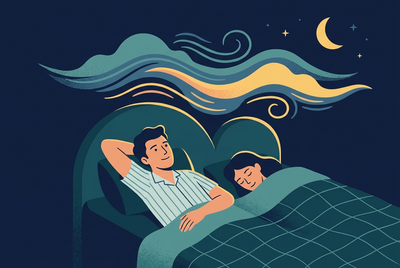
The Problem With the Snoring Stereotype
Snoring is the symptom everyone knows, so it has become the thing everyone screens for. If you don't snore, or nobody has ever told you that you do, it's easy to assume you're in the clear.
But snoring is only one possible sign of a breathing problem during sleep. Plenty of people with obstructive sleep apnea (OSA) don't snore loudly, or don't snore at all. Their airway is still narrowing and their oxygen is still dipping through the night; the noise just isn't part of their particular pattern. When the only question a person gets asked is "do you snore?", a quiet case sails right past.
The "Silent" Symptoms Checklist
None of these prove you have sleep apnea on their own. But if 2 or 3 feel familiar, especially night after night, they're worth taking seriously.
- Morning headaches: When breathing pauses cause oxygen to dip overnight, blood vessels in the brain can widen, and you wake up with a dull, recurring headache.
- Waking up unrefreshed: You slept 7 or 8 hours and still feel like you didn't sleep at all.
- Fatigue and brain fog that don't lift: Trouble focusing, a foggy memory, and tiredness that coffee doesn't fix.
- "Anxiety" at night: A racing heart or a jolt of unease as you're falling asleep or in the early hours. Some people describe it as nighttime anxiety when it's actually the body reacting to a pause in breathing.
- Night sweats: Waking up damp or overheated. Interrupted breathing can trigger stress hormones and throw off how your body regulates temperature overnight.
- Insomnia, trouble falling or staying asleep: Instead of loud snoring, a lot of people simply can't stay asleep, and it gets written off as ordinary insomnia.
- Frequent trips to the bathroom at night.
- Mood changes: Irritability, low mood, or feeling more anxious than usual during the day.
- Waking with a dry mouth, or teeth grinding and a sore jaw.
If several of these are familiar, don't panic. Take it seriously, and ask a better question than "do you snore?" This was never only about snoring.
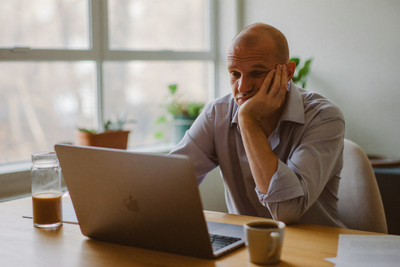
Why Women and Slimmer People Get Missed
Two groups tend to fall through the cracks, and it's worth saying why.
Women
Research consistently finds that women are less likely than men to report loud snoring or obvious breathing pauses, and more likely to show up with fatigue, insomnia, morning headaches, and mood changes. Because those symptoms overlap with stress, anxiety, or hormonal shifts, sleep apnea is often the last thing anyone checks, and it goes underdiagnosed in women as a result.
Slim and Fit People
Extra weight is a well-known risk factor, so a lot of screening quietly assumes a thinner person isn't at risk. That assumption misses people. Researchers estimate that roughly 1 in 5 people with sleep apnea aren't obese at all. Airway shape, jaw and nasal structure, and how your body controls breathing overnight all play a role, and none of them show up on a bathroom scale. When a provider screens on body type alone, a slim patient with a genuine breathing problem can be told they're fine.
The common thread: if you don't fit the picture, someone has to look a little harder. And looking harder means measuring, not guessing.

Why a Full Night of Data Matters More Than a Symptom List
Here's the real limit of any checklist, including this one: symptoms point you in a direction, but they can't tell you what's actually happening while you're asleep. That's the trouble with a quiet case. The evidence shows up in a room where nobody's watching.
That's what a home sleep test is for. Instead of guessing from daytime clues, it records what your body does overnight: your breathing, your heart rate, your oxygen levels, and how your sleep is structured through the night. Those are exactly the signals a quiet case hides.
One of the tools we use is the SleepImage Ring, a small ring you wear to bed in your own home. Through the night it captures your pulse, oxygen levels, and sleep patterns, and that data is analyzed for the respiratory disturbances a "do you snore?" conversation would never catch. It's FDA-cleared for diagnosing sleep-disordered breathing. That means clinical-grade data a physician can read, not a wellness gadget guessing at your sleep score.
At SleepTest.com, we match the right device to each patient, so the specific tool may vary. The point holds: real overnight measurement instead of a guess.
How Getting Tested Actually Works
We built the process to be about as easy as testing gets:
- Start online: Take the short quiz or order a test. No in-lab visit, no sleep-clinic waiting list.
- We ship the device to your door: We'll walk you through a simple 2-night study you complete in your own bed.
- A board-certified sleep physician reviews your results: You'll receive a clear interpretation of what your overnight data shows.
- You get answers you can act on: If treatment makes sense, you'll have the documentation you need to take the next step with your provider.
No sleeping in a lab wired to machines. No months-long referral maze.
You Deserve a Real Answer, Not a Shrug
If you've been told your fatigue, your headaches, or your restless nights are "just" stress, and something still feels off, it may be worth looking at what your breathing is doing while you sleep. Not every symptom means sleep apnea. You still deserve to know for sure instead of guessing.
Sleep apnea was never only about the snore.
Take the 1-minute quiz to see if a home sleep test is right for you, or order your sleep test and get real answers from the comfort of your own bed.
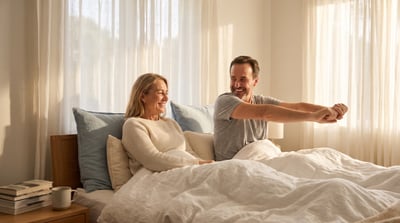
Waking up exhausted, snoring loudly, or fighting brain fog all day? Sleep apnea treatment has never had more options, from CPAP and custom oral appliances to weight-loss medication and Inspire nerve stimulation. But every one of them starts with the same step: an official diagnosis from a sleep test, which you can now take at home in your own bed.
Sleep apnea does not always come with loud snoring. Morning headaches, fatigue, brain fog, night sweats, insomnia, and nighttime anxiety can all be quieter warning signs that are easy to overlook. Learn who is most likely to be missed, what symptoms to watch for, and why overnight testing can provide clearer answers.
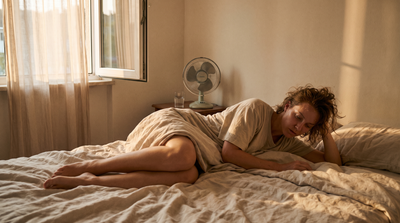
Summer heat and humidity can worsen sleep apnea by increasing airway inflammation, relaxing throat muscles, disrupting deep sleep, and placing additional strain on the heart. This article explores eight ways higher temperatures may increase sleep apnea symptoms, along with practical tips for staying cool, reducing nighttime breathing disruptions, and protecting your health. It also explains how a home sleep test can measure your AHI and oxygen levels to help you better understand your sleep.

